Provenance or Pretense: A Sommelier's Framework for Authenticating Blockchain Protocols

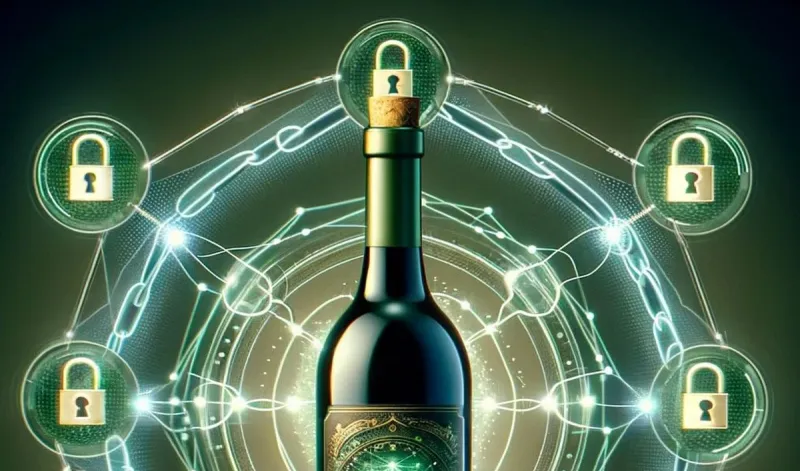
Photo: sommelier examining wine bottle label in cellar with blockchain digital overlay, via robbreport.com
In the world of fine wine, provenance is everything. A bottle of 1982 Pétrus commands its price not merely because of what is inside, but because of the documented chain of custody, the verified estate of origin, and the decades of reputation built around the producer. Strip away that provenance, and what remains is simply fermented grape juice at an unjustifiable premium.
The same principle applies with striking precision to blockchain protocols. The cryptocurrency landscape is littered with networks that present themselves as revolutionary infrastructure while quietly borrowing their architecture wholesale from established chains, padding their documentation with recycled white papers, and masking thin developer communities behind aggressive marketing budgets. For newer investors navigating this space, learning to authenticate a protocol's genuine maturity is not a luxury — it is a prerequisite for responsible capital allocation.
At VinBetz, we believe the analytical discipline that separates a master sommelier from a casual wine drinker is the same discipline that separates a sophisticated crypto investor from one who repeatedly falls for counterfeit vintages.
Examining the Label: What a Protocol's Documentation Tells You
A reputable wine producer maintains meticulous records — harvest logs, fermentation notes, bottling dates. The documentation is not marketing material; it is evidence. When evaluating a blockchain protocol, treat its white paper, GitHub repository, and developer communications with the same skeptical scrutiny you would apply to a provenance certificate accompanying a rare bottle.
Genuine protocols typically exhibit a development history that predates their public launch by months or years. Commit logs on public repositories tell a story: consistent, incremental contributions from multiple developers over time suggest a project that evolved organically. By contrast, a repository that appears fully formed almost overnight — or one where the bulk of commits occurred in a compressed window just before a token launch — raises the same suspicion as a wine with suspiciously uniform aging characteristics inconsistent with its claimed vintage.
Pay close attention to whether the white paper addresses technical problems with specificity or leans on vague promises of disruption. Authentic protocols name their architectural choices, acknowledge known limitations, and cite prior work honestly. Counterfeit ones tend toward grandiosity without substance, much like a fraudulent wine label that lists prestigious appellations without the underlying terroir to support them.
The Developer Community: Your Equivalent of the Winemaking Team
No great wine emerges from an absent winemaker. The human capital behind a protocol — its core developers, independent contributors, and security researchers — functions as the winemaking team responsible for every decision from vine to bottle. Evaluating this community is among the most revealing exercises an investor can undertake.
A healthy developer ecosystem is characterized by diversity and independence. If a protocol's GitHub shows contributions from only two or three accounts, or if the founding team controls an overwhelming share of repository access, the decentralization narrative collapses under examination. Cross-reference developer identities where possible: established contributors often have verifiable histories on platforms like Stack Exchange, academic preprint archives, or prior open-source projects.
Governance transparency is equally telling. Protocols with genuine maturity typically maintain public forums — whether on-chain governance portals, community forums, or published improvement proposals — where substantive technical debate occurs. The absence of such forums, or forums where dissent is consistently suppressed, mirrors the opacity of a wine producer who refuses third-party audits. Opacity protects fraud; transparency enables trust.
Battle-Tested Security: The Cellar That Has Survived the Seasons
A wine cellar's true quality reveals itself not on the day it is built, but after it has endured humidity fluctuations, power outages, and the slow passage of time. For blockchain protocols, security is the cellar — and the only way to truly assess it is to examine how the network has performed under adversarial conditions.
Protocols that have operated for multiple years across varying market cycles carry a form of credibility that no audit report alone can replicate. Examine the incident history: has the network experienced exploits, and if so, how did the team respond? A transparent, well-documented response to a past security incident is often more reassuring than a protocol that claims a flawless record, particularly if that record is brief.
Independent security audits from credible firms — not paid promotional reviews — add meaningful weight to an authentication case. Look for audits conducted by organizations with established reputations in the space, and verify that audit findings were published in full, including any unresolved issues. A producer who hides the sommelier's notes is rarely proud of what those notes contain.
Red Flags That Signal a Counterfeit Vintage
Certain warning signs appear with enough regularity that investors should treat them as near-automatic disqualifiers:
- Rushed launch timelines with token sales occurring before any functional mainnet exists
- Forked codebases presented as original innovation, particularly when the fork is undisclosed or minimized
- Anonymous founding teams with no verifiable professional histories and no accountability structures
- Governance tokens concentrated in a small number of wallets, often controlled by insiders
- Aggressive influencer marketing campaigns that outpace technical development announcements
- Absence of a bug bounty program, suggesting the team either lacks confidence in external scrutiny or lacks the resources to sustain one
Each of these flags, individually, warrants caution. In combination, they constitute a profile that should prompt an investor to set the bottle down and walk away from the table.
Green Flags: The Hallmarks of Genuine Maturity
Authentic protocols do not need to shout their credentials. Their track record speaks at a measured, confident volume:
- A documented development history spanning multiple years with verifiable milestones
- A diverse, active contributor base with transparent governance processes
- Security audits conducted by independent firms, published without redaction
- A demonstrated capacity to adapt — through protocol upgrades, community-approved changes, or credible responses to technical challenges
- Institutional adoption or integration by projects with their own reputations at stake
These characteristics do not guarantee future performance, but they substantially reduce the probability that an investor is holding a counterfeit. In a market where imitation is industrialized, that reduction in risk carries real value.
Pouring with Confidence
The sommelier's art is not about elitism — it is about knowledge applied systematically to protect the integrity of a transaction. When you pay for a great vintage, you deserve to receive one. When you allocate capital to a blockchain protocol, you deserve to understand what you are actually buying.
Developing a rigorous authentication framework takes time, but the alternative — trusting labels over substance — is a far more expensive education. Study the provenance, interrogate the winemaking team, examine the cellar's history, and pour only when the evidence justifies the investment.