What the Auction Floor Knows That the Trading Terminal Does Not: Lessons From Wine Data Science
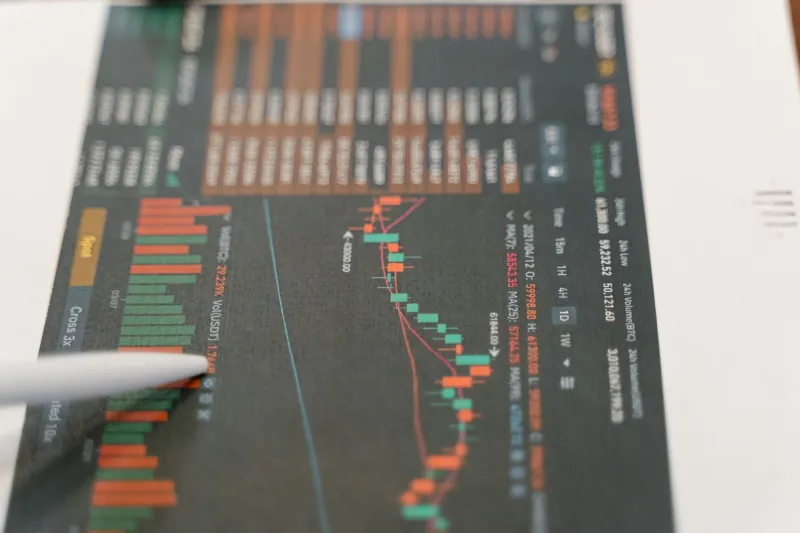
There is a particular kind of expertise that accumulates slowly, far from the noise of social media sentiment and algorithmic trading desks. It lives in the back offices of major auction houses, where analysts spend their careers building regression models around Burgundy futures, tracking provenance records, and benchmarking individual bottles against decades of comparable sales data. These professionals do not chase momentum. They do not follow trending hashtags. And yet, by several measurable standards, their predictive accuracy on long-term asset appreciation quietly outperforms the majority of retail cryptocurrency strategies in circulation today.
The question worth asking is not simply why that gap exists. The more productive inquiry is what crypto traders can extract from their methodology — and how quickly those lessons can be applied to a market that often mistakes speed for sophistication.
The Architecture of a Wine Pricing Model
At its core, a professional wine pricing model does something deceptively straightforward: it attempts to isolate the variables that genuinely predict future value from those that merely correlate with current excitement. Auction house analysts typically work with longitudinal datasets spanning twenty to forty years of hammer prices, layering in producer reputation, regional vintage quality scores, storage provenance, label condition, and global demand indices. The result is not a prediction of next week's auction clearing price. It is a probabilistic estimate of where a given bottle will sit in the market five, ten, or fifteen years out.
What makes this approach structurally sound is its indifference to short-term noise. A particularly enthusiastic bidding war at a New York auction house in a given quarter does not materially alter the five-year regression line for a well-documented Napa Cabernet with verified cellar history. The model absorbs that data point, adjusts marginally, and continues projecting from fundamentals.
For cryptocurrency traders accustomed to treating every price spike as a signal and every volume surge as confirmation, this disposition toward long-horizon modeling represents a genuine philosophical departure.
Where On-Chain Metrics Fall Short
On-chain analytics have matured considerably over the past several years. Metrics tracking realized capitalization, long-term holder supply, exchange inflow and outflow ratios, and network activity have given sophisticated crypto participants tools that genuinely improve entry and exit timing in the medium term. The infrastructure is impressive. The problem is that most retail traders apply these instruments to questions they were never designed to answer.
On-chain metrics are predominantly reactive. They describe what participants have done, where capital has moved, and how network utilization has shifted. They are considerably less reliable at answering the question that actually determines long-term portfolio outcomes: which assets carry the structural characteristics to appreciate meaningfully over a multi-year horizon?
Wine auction analysts, by contrast, have built their entire professional discipline around exactly that question. Their models are explicitly prospective. They are trained on outcomes, not just activity. And because the wine market operates without the feedback loops created by algorithmic trading bots and leveraged derivatives, the signal-to-noise ratio in historical pricing data is substantially cleaner than anything available on a crypto exchange order book.
Vintage Benchmarking as a Valuation Discipline
One of the most transferable concepts from wine data science is the practice of vintage benchmarking — the systematic comparison of a given asset's performance trajectory against a reference class of comparable assets from the same era under similar conditions.
In wine terms, this means evaluating a specific Bordeaux not in isolation, but against the full cohort of wines produced in that vintage across comparable appellations, then tracking how the relative ranking of those wines has evolved over time. Analysts look for assets that were underpriced relative to their peer group at release and have since demonstrated consistent appreciation independent of broader market enthusiasm.
The crypto equivalent would involve constructing a rigorous cohort analysis of projects launched during a specific market cycle — say, the 2020 to 2021 expansion — and systematically comparing their post-cycle retention of value against variables such as developer activity, protocol revenue, token distribution structure, and the durability of their use case. Most retail traders never perform this analysis. They evaluate assets in isolation, anchored to their own entry price rather than to a meaningful reference class.
The wine analyst would find this approach baffling. Every serious pricing model in the auction world is built on comparative cohort data, because no asset exists in a vacuum. Value is always relative, and the reference class you choose determines the quality of your conclusions.
Regression to Fundamentals: The Patience Premium
Perhaps the most counterintuitive lesson from wine data science is what might be called the patience premium — the empirical observation that assets with strong fundamental characteristics consistently outperform their short-term price action would suggest, but only over time horizons that most speculative traders are unwilling to hold.
Auction house analysts have documented this phenomenon extensively. Wines from exceptional producers in strong vintages frequently trade below their long-term regression line in the five to eight years following release, as initial enthusiasm fades and the broader market moves on to newer releases. Buyers who acquire during this trough period — guided by model output rather than market sentiment — capture the bulk of the eventual appreciation.
The parallel in cryptocurrency is not difficult to identify. Projects with genuine protocol utility, active development, and defensible network effects routinely experience prolonged periods of price suppression following speculative peaks. The traders who exit during those periods, discouraged by stagnant charts, are precisely the participants who miss the subsequent appreciation. The wine analyst would recognize this pattern immediately. The crypto trader, trained to interpret flat price action as irrelevance, typically does not.
Building a Hybrid Framework
The practical synthesis of these two traditions does not require abandoning on-chain analytics. It requires supplementing them with the longer-horizon orientation that wine data science has refined over decades.
A hybrid framework would combine the real-time sensitivity of on-chain metrics — useful for identifying accumulation patterns and network health — with a vintage benchmarking discipline that situates each asset within a meaningful peer cohort and tracks its relative performance over multi-year intervals. It would incorporate regression modeling that weights protocol fundamentals more heavily than price momentum, and it would build in explicit tolerance for the patience premium: the willingness to hold an undervalued position through extended periods of market indifference.
This is not a novel idea. It is, in fact, the approach that the most consistently profitable long-term investors in any speculative market have always employed. The wine auction floor arrived at it through necessity, because the liquidity constraints of fine wine trading make short-term speculation structurally impractical. Crypto traders face no such constraint, which is precisely why so few of them have developed the discipline on their own.
The Lesson the Terminal Cannot Teach
The trading terminal is an instrument of extraordinary power. It delivers real-time data, pattern recognition tools, and execution speed that no auction house analyst has ever had access to. What it does not deliver — and cannot deliver — is the institutional patience that comes from building models designed to be evaluated over decades rather than days.
The wine data scientists working in the back offices of the major auction houses are not smarter than the best crypto traders. They are, however, asking a fundamentally different question. And in speculative markets where the majority of participants are consumed by the question of what happens next week, the minority asking what happens in five years tends to accumulate a durable and compounding advantage.
That advantage is available to any crypto trader willing to borrow the playbook. The spreadsheet already exists. The only missing ingredient is the disposition to use it.