Cuvée and Click: How Savvy Collectors Are Trading Limited NFTs With a Fine Wine Speculator's Instinct
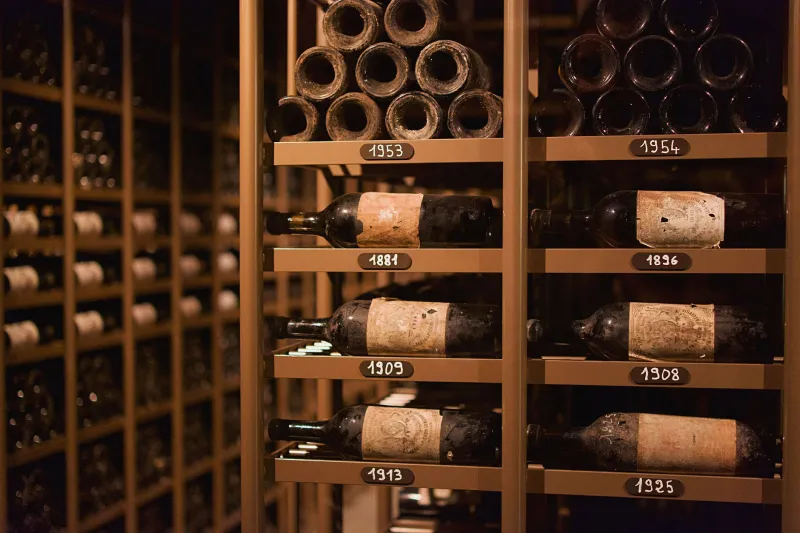
There is a particular kind of patience required of the wine futures buyer — the négociant who purchases Bordeaux en primeur before the wine is bottled, before the critics have scored it, and certainly before the broader market has decided it deserves a premium. That buyer is not acting on certainty. They are acting on judgment: an assessment of soil conditions, winemaker reputation, and the quiet signals that suggest something exceptional is developing in the barrel.
A growing cohort of NFT collectors in the United States has adopted precisely this posture toward digital assets. Rather than purchasing established blue-chip projects at peak valuations, they are identifying emerging collections early — before mainstream adoption, before celebrity endorsements, and before the inevitable flood of retail interest drives floor prices beyond reason. The parallels to wine speculation are not cosmetic. They reflect a genuine alignment in methodology.
The Logic of Early Entry
In the wine world, the best futures buyers do not simply purchase what is already acclaimed. They study the fundamentals: the producer's track record, the regional vintage conditions, the early barrel samples that suggest either promise or mediocrity. Price discovery has not yet occurred. That gap between intrinsic quality and market recognition is precisely where profit lives.
NFT collectors operating with this framework apply comparable diligence. They examine the founding team's prior work, the coherence of the project's artistic vision, the strength and authenticity of the community forming around it, and the broader thematic resonance of the collection within current cultural conversation. A project with a credible creator, genuine scarcity mechanics, and an organically engaged Discord community in its early weeks resembles an unscored barrel sample: it has not yet been validated by the market, but the signals are present for those trained to read them.
The critical discipline here is avoiding the temptation to conflate noise with signal. Not every collection generating early buzz represents genuine collector appeal. Some are expertly marketed vessels with little substance beneath the surface — the digital equivalent of a well-labeled bottle from an unremarkable vintage.
Reading the Hype Cycle as a Fermentation Schedule
Wine fermentation follows a predictable arc. There is initial turbulence, then a period of active development, a moment of peak aromatic complexity, and eventually — if the wine is not consumed at the right time — a gradual decline into flatness. The collector who understands this arc does not wait for the wine to be universally praised before opening a position. Nor do they hold indefinitely, assuming the peak will sustain itself.
NFT hype cycles operate with a structurally similar rhythm. Community sentiment builds from curiosity to enthusiasm to fervor. Floor prices climb. Secondary market volume surges. Then, with a reliability that experienced flippers have come to anticipate, the market's attention shifts elsewhere. The collection that commanded breathless coverage in crypto media becomes yesterday's conversation. Floor prices compress. Liquidity thins.
Successful speculators in this space — and it is worth being precise about that word, because speculation is exactly what this activity involves — develop an almost intuitive sensitivity to where a given project sits on this arc. They track social velocity: how quickly a project's follower count is growing, whether the growth is organic or driven by paid promotion, and crucially, whether the conversation around the project is substantive or purely price-focused. A community discussing the art, the lore, or the utility of a collection is a community with staying power. A community discussing floor price almost exclusively is a community preparing, consciously or not, for a rapid exit.
The Exit Discipline That Separates Collectors From Speculators
Here the wine analogy becomes particularly instructive. The finest Burgundy, held too long in a cellar that lacks ideal conditions, does not simply plateau — it deteriorates. The collector who refuses to sell because they believe the wine will only improve is not exercising patience; they are exercising denial. The same psychological trap ensnares NFT holders who mistake attachment to a project for sound investment reasoning.
The most effective NFT flippers treat their exit strategy with the same rigor they apply to their entry. They establish, before purchasing, the conditions under which they will sell: a target floor price, a target timeline, or specific behavioral indicators in the community that signal the hype cycle is approaching saturation. When those conditions are met, they act — regardless of whether the broader market conversation still sounds bullish.
This is harder than it sounds. The final phase of a hype cycle is typically its loudest. Mainstream media coverage arrives precisely when the smart money is beginning to exit. The collector who has held through the early and middle phases of appreciation is now watching their asset reach its highest public visibility — and that visibility creates a powerful psychological incentive to hold just a little longer. The wine speculator's discipline is to recognize that the moment of maximum acclaim is frequently the moment of maximum risk.
Identifying Collector Appeal Before the Crowd Arrives
For those looking to apply this framework systematically, several indicators have proven consistently relevant in distinguishing projects with genuine collector appeal from those sustained purely by speculative momentum.
Artistic coherence remains a primary signal. Collections that reflect a singular, developed aesthetic vision — where the generative traits feel intentional rather than arbitrary — tend to retain collector interest beyond the initial hype window. They function more like editions from a recognized artist than like lottery tickets.
Scarcity mechanics matter enormously. Projects with hard supply caps, meaningful trait hierarchies, and no history of unlimited minting expansions behave more like limited-production wines than mass-market labels. The secondary market for truly scarce digital assets tends to maintain liquidity even as broader enthusiasm cools.
Founder credibility and transparency serve as the equivalent of a winemaker's reputation. Collectors who can verify the team's prior work, who see consistent communication and fulfilled roadmap commitments, are purchasing into a provenance they can articulate — which matters when it comes time to sell.
The Uncomfortable Truth About Timing
No framework, however disciplined, eliminates the fundamental uncertainty of secondary market speculation. The wine futures buyer can read every available signal and still purchase a vintage that disappoints. The NFT collector who applies rigorous analysis can still find themselves holding a project that exits the cultural conversation faster than anticipated.
What the framework provides is not certainty but an improved ratio of informed decisions to reactive ones. It replaces the emotional pattern of buying at peak excitement and selling in despair with a more deliberate process — one that respects both the genuine opportunity in emerging digital collectibles and the very real risk of mistaking momentum for value.
At VinBetz, we view this intersection of wine market methodology and blockchain asset speculation as one of the more intellectually honest applications of traditional investment thinking to a new asset class. The secondary market for limited NFTs is not a guaranteed return. But for the collector willing to study the vintage carefully, enter before the critics arrive, and exit before the bottle goes flat, it represents a genuinely compelling arena for disciplined speculation.