Breathing Room: Why the Most Profitable Crypto Trades Begin With Knowing When Not to Sell

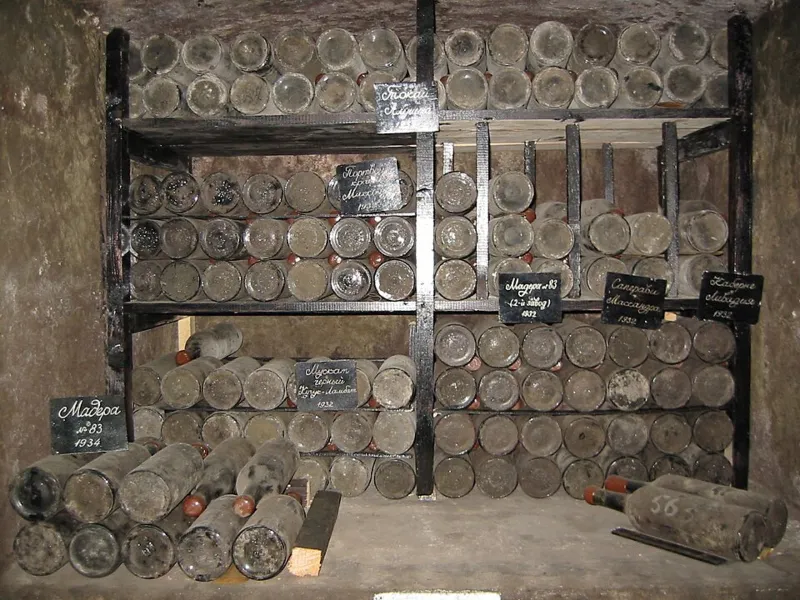
Photo: Erwin Schwabe, CC0, via Wikimedia Commons
In the world of fine wine, decanting is not merely a ritual — it is a calculated intervention. When a structured Bordeaux or a tannic Barolo is poured into a wide-bottomed decanter, oxygen begins a quiet transformation. Harsh edges soften. Aromatics emerge. The wine reveals complexity that would have been entirely invisible had someone simply uncorked the bottle and rushed it to the table.
The same principle applies, with remarkable precision, to managing winning positions in cryptocurrency markets. The impulse to sell the moment a trade turns green is understandable — markets move fast, gains evaporate quickly, and the memory of previous losses makes profit-taking feel urgent. But experienced traders increasingly recognize that this reflex, left unchecked, is one of the primary reasons retail investors consistently underperform their own thesis.
At VinBetz, we believe that the discipline of the cellar is inseparable from the discipline of the trading desk. Allowing a position to breathe — to develop within its market context before execution — is not passivity. It is precision.
The Psychology Behind Premature Exits
Behavioral economists have a name for the anxiety that grips traders the moment a position moves in their favor: loss aversion asymmetry. Studies consistently show that investors feel the psychological pain of a potential loss roughly twice as acutely as they feel the pleasure of an equivalent gain. In practical terms, this means that the moment a trade becomes profitable, the emotional pressure to lock in that gain — and avoid the possibility of watching it evaporate — often overrides rational analysis.
This is the trading equivalent of pulling a wine from the cellar the moment fermentation completes. Technically, it is wine. But it is not yet what it was meant to be.
The problem is compounded in crypto markets by the sheer velocity of price movement. A token can climb 30% in an afternoon and retrace half of that within hours. For the trader watching a position tick upward in real time, every red candle feels like a threat. The temptation to close becomes nearly unbearable — and most retail participants capitulate to it, selling into strength at the first sign of resistance rather than allowing the broader trend to play out.
What On-Chain Data Reveals About Holding Discipline
Analysis of on-chain transaction data from major market cycles offers a sobering perspective on this behavior. During the 2020-2021 bull market, a significant proportion of Bitcoin and Ethereum addresses that sold within the first 20% of a price rally subsequently watched the asset continue upward by multiples. Glassnode's SOPR (Spent Output Profit Ratio) metric — which tracks whether coins moving on-chain are being sold at a gain or a loss — repeatedly showed retail cohorts exiting positions early while longer-term holders continued to accumulate.
The pattern mirrors what sommeliers observe in inexperienced wine buyers: the tendency to consume bottles at the front end of their drinking window, before secondary and tertiary flavors have had the opportunity to develop. The wine is good. It simply was not yet what it could have been.
Sophisticated crypto traders, by contrast, approach exit timing with a set of layered conditions rather than a single price target. They observe volume profiles, monitor funding rates in perpetual futures markets, track the behavior of large wallets, and assess broader market sentiment before executing. This multi-input approach to timing is the analytical equivalent of observing a decanting wine — checking its color against a white surface, noting the evolution of its bouquet, testing its texture — before committing to the pour.
Building a Framework for Disciplined Exit Timing
The practical challenge is constructing a methodology that imposes structure on what is fundamentally an emotional decision. Several frameworks have demonstrated consistent utility across market cycles.
Define exit conditions before entry. A trade thesis should include not only the reason for entering a position but the specific conditions under which you will exit — both in profit and at a stop-loss. This removes the decision from the heat of the moment and anchors it in the logic that informed the original analysis. A vintner does not decide at harvest whether the grapes are ready; that determination begins months earlier, informed by soil composition, weather patterns, and varietal characteristics.
Use time-based tranches rather than single exit points. Rather than closing an entire position at once, consider scaling out in portions — selling a percentage at a first target, another portion at a second, and allowing the remainder to run with a trailing stop. This approach captures gains at multiple intervals while preserving exposure to continued upside. It is, in essence, the portfolio equivalent of opening a case of the same vintage across different years to observe its evolution.
Monitor momentum divergences as a signal to prepare — not to panic. When price continues to rise but momentum indicators such as the RSI or MACD begin to diverge downward, this is not necessarily a signal to sell immediately. It is a signal to prepare — to tighten a trailing stop, to assess volume confirmation, to review whether the original thesis remains intact. Divergence is the market's equivalent of a wine beginning to show its first signs of maturation; it warrants attention, not alarm.
Separate short-term noise from structural trend. Crypto markets generate an enormous volume of price movement that is entirely unrelated to fundamental value. A 10% intraday correction in a strong uptrend is not a trend reversal — it is volatility. The trader who exits on that correction and watches the asset recover and continue higher has not avoided risk; they have simply crystallized a smaller gain than their analysis originally supported.
Patience as a Competitive Advantage
In a market dominated by algorithmic trading, high-frequency execution, and social media-driven sentiment swings, patience has become genuinely scarce — and therefore genuinely valuable. The trader who can resist the impulse to close a position prematurely, who can hold a thesis through short-term turbulence because the underlying data remains supportive, possesses an edge that no software can replicate.
This is, ultimately, what the decanting metaphor illuminates. The sommelier who reaches for the decanter is not being slow. They are being deliberate. They understand that the wine in that bottle has already done its work over months or years in the cellar, and that a few minutes of patience at the table will be the difference between a good experience and an exceptional one.
The crypto markets will continue to reward those who bring the same deliberateness to the trading desk. Positions, like vintages, need room to develop. The discipline to give them that room — to resist the noise, to honor the thesis, to let the trade breathe — is not a passive quality. It is one of the most active and demanding skills a serious investor can cultivate.
At VinBetz, we maintain that the finest returns, like the finest wines, are rarely the product of haste.