Uncorked Too Soon: The True Cost of Exiting Crypto Positions Before the Rally Arrives

There is a particular kind of regret that haunts wine collectors. It arrives not at the moment of sale, but months later — when an auction catalog arrives in the mail and a bottle they parted with for $400 is now commanding four times that figure. The wine did not change. The fundamentals that made it valuable were always present. What changed was the market's recognition of those fundamentals, and the collector was no longer holding when that recognition finally arrived.
Crypto investors know this feeling intimately. The mechanics differ, but the emotional architecture is identical. Selling a position weeks or even days before a major rally does not simply cost money. It costs confidence, disrupts strategy, and introduces a second-order problem that is arguably more damaging than the missed gain itself: the tendency to chase the asset back at a higher price.
The Anatomy of a Premature Exit
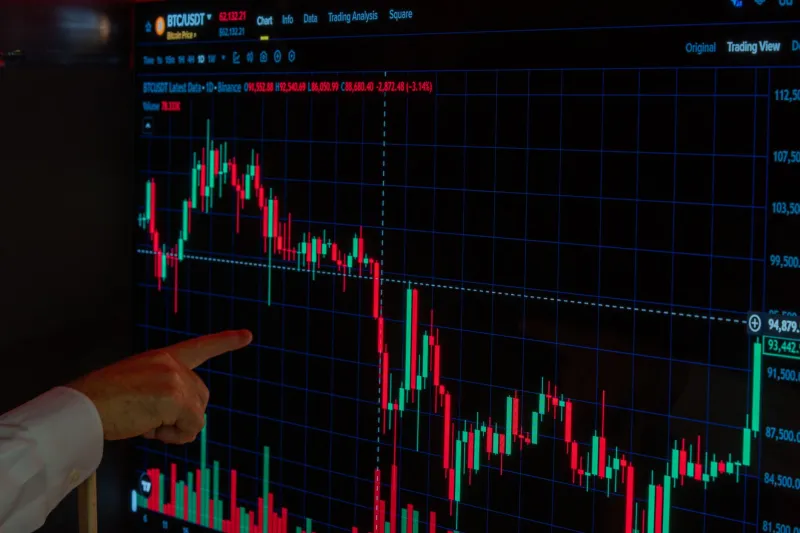
In the spring of 2020, a significant cohort of retail Bitcoin holders liquidated positions during the sharp COVID-related market selloff, with BTC briefly touching $3,800 in mid-March. Many of those investors, spooked by broader equity market chaos and uncertain macroeconomic conditions, exited with losses or marginal gains. By December of that same year, Bitcoin had surpassed $28,000 — a move of nearly 640 percent from the panic low.
More instructive than the numbers, however, is the behavioral pattern that followed. A substantial portion of those early sellers re-entered the market between $15,000 and $25,000, driven by the very FOMO their early exit had created. They sold low, watched the rally, and then bought back at prices that compressed their eventual returns significantly. The wine was poured too early, and they paid a premium to taste it again.
Ethereum offered a similar lesson in late 2020 and early 2021. Investors who exited near $600, citing concerns about network congestion and the uncertain timeline for the Merge, watched the asset climb past $4,000 within months. The underlying thesis — smart contract adoption, DeFi growth, institutional interest — had not been invalidated. It had simply not yet been priced in.
Distinguishing Profit-Taking From Panic Selling
The challenge for any serious investor is that not every early exit is a mistake. Disciplined profit-taking is a legitimate and necessary component of portfolio management. The question is not whether to sell, but why you are selling — and whether that reason is rooted in analysis or anxiety.
Consider how a master sommelier approaches the decision to open a prized bottle. The choice is rarely impulsive. It is informed by an understanding of the wine's development arc, the conditions in which it has been stored, and the specific characteristics that signal readiness. Selling a bottle because a guest seems impatient is a categorically different decision from selling because the wine has genuinely reached its optimal expression.
Applied to crypto investing, the framework looks something like this:
Legitimate reasons to exit a position:
- The original investment thesis has been materially invalidated by on-chain data, regulatory developments, or competitive displacement
- A predetermined price target has been reached and the position size relative to portfolio warrants rebalancing
- Liquidity needs are genuine and time-sensitive
- A superior opportunity has been identified that requires capital reallocation
Warning signs of panic selling:
- The decision is triggered primarily by short-term price action rather than fundamental change
- The exit coincides with peak negative sentiment in social media or news cycles
- There is no documented rationale that existed before the price decline began
- The seller cannot articulate what would need to change for the original thesis to be restored
The distinction matters because the financial consequences of the two behaviors are dramatically different over time.
The Compounding Cost of Conviction Failure
Beyond the immediate missed gains, premature exits carry a compounding cost that rarely appears in post-trade analysis. When an investor sells an asset prematurely and watches it rally, the psychological damage often manifests as one of two destructive patterns: either they re-enter at elevated prices (buying high after selling low), or they become overly cautious in subsequent positions, missing additional opportunities out of excessive risk aversion.
This is the sommelier's true regret — not merely the dollar value of the bottle, but the disruption it causes to their entire approach to the cellar. A single poorly timed sale can undermine years of patient, research-driven acquisition strategy.
Data from multiple market cycles suggests that the investors who consistently generate the strongest long-term returns are not those who time exits with the greatest precision, but those who hold conviction-backed positions through volatility with the discipline of a collector who trusts their own palate over the noise of the room.
Building a Framework for Position Conviction
The antidote to premature exits is not stubbornness — it is structured conviction. Before entering any significant position, serious investors should establish what might be called a thesis document: a written record of the specific reasons for the investment, the conditions under which those reasons would be invalidated, and the price levels or timeframes at which partial or full exits would be considered.
This document serves the same function as tasting notes in a wine cellar. It creates an objective reference point that exists independently of market emotion. When volatility arrives — and it always does — the investor can return to the document and ask a simple question: has anything here materially changed? If the answer is no, the rational response is to hold, or potentially to add to the position.
If the answer is yes, then selling is not a failure of nerve. It is an informed adjustment based on new information — the equivalent of recognizing that a bottle has been compromised and acting accordingly.
The Long Vintage Perspective
The finest wine investments are rarely validated quickly. Burgundy producers whose bottles now command thousands of dollars at auction spent decades building the reputation and track record that justify those prices. The collectors who profited most were those who identified quality early, held through periods of indifference, and resisted the temptation to liquidate when the broader market had not yet caught up to their assessment.
Crypto markets, for all their volatility, operate on a similar principle. The assets that have generated the most significant long-term returns — Bitcoin, Ethereum, and a select tier of infrastructure protocols — rewarded those who held conviction through cycles of extreme pessimism. They punished those who allowed short-term noise to override long-term analysis.
At VinBetz, we believe the most valuable skill a crypto investor can develop is not the ability to time the perfect exit, but the discipline to distinguish between a position that deserves patience and one that deserves reconsideration. The sommelier who opens every bottle at first opportunity never tastes what time can do. The investor who exits at every dip never discovers what patience can build.
The vintage that rewards you most will almost certainly be the one you were tempted to sell too soon.